Introduction
General principles
Obstetrical Anesthesia Services
Analgesia and sedation during labor
Parenteral agents
| Agent | Usual Dose | Frequency | Onset | Neonatal Half-Life |
| Meperidine | 25–50 mg (IV) | Q 1–2 hr | 5 min (IV) | ?18–20 hr |
| 50–100 mg (IM) | Q 2–4 hr | 30–45 min (IM) | ?60 hr |
| Fentanyl | 50–100 ?g (IV) | Q 1 hr | 1 min | ?5 hr |
| Morphine | 2–5 mg (IV) | Q 4 hr | 5 min (IV) | ?7 hr |
| 10 mg (IM) | | 30–40 min (IM) |
TABLE 25-3 Some parenteral analgesic agents for labor painNitrous oxide
Regional analgesia
Anesthetic agents
Central Nervous System Toxicity
Cardiovascular Toxicity
Management of Local Anesthetic Systemic Toxicity
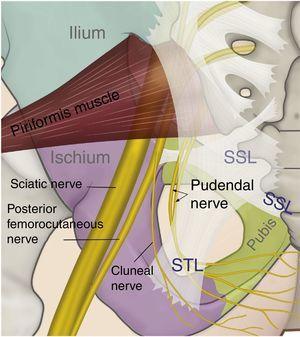
Pudendal Block
Paracervical Block
Neuraxial analgesia
Spinal (Subarachnoid) Block
Spinal anesthesia – through the sacrospinous lig.
| Labor pain (vaginal) | T10~L1 |
| C-sec | ~T4 (under xiphoid) |
| Perineal stretching | Pudental nerve – S2~S4 |
| Absolute contraindications | Refractory ???, Coagulopathy, Infection, IICP |
Epidural Analgesia
Continuous Lumbar Epidural Block
Technique

Complications
- Higher or total spinal blockade
- When local anesthesia ascends toward the head. It may happen with intrathecal injection or overdose of the anesthetic.
- Depressed cervical spinal cord and brainstem activity.
- Ineffective analgesia
- Hypotension
- ~10%, when the sympathetic nerve fibers responsible for vascular tone are blocked. ? vasodilation & decreased venous return
- It can be prevented by aggressive IV fluid volume expansion prior to epidural placement.
- Treatment
- Left uterine displacement to improve venous return
- Additional IV fluid bolus, or vasopressor administration.
- Maternal fever
- Back pain
- Miscellaneous complications
- Spinal/epidural hematoma
- Epidural abscesses
- Plastic epidural catheter can be sheared off
- Postdural puncture headache (PPH)
- Positional (worse when upright, improves when supine), neck stiffness
- Photophobia, diplopia, hearing loss, tinnitus
- Correlates with the increased and decreased herniation/pressure on the brain, within 72 hours of the procedure.
- Typically self-limited. Epidural blood patch
Effects on labor
- Fetal heart rate
- Cesarean delivery rates
Timing of epidural placement
Safety
Contraindications
- Thrombocytopenia
- Anticoagulation
- Severe preeclampsia-eclampsia
Combined Spinal–Epidural Analgesia
Continuous Spinal Analgesia During Labor
Local infiltration for cesarean delivery
General anesthesia
Patient Preparation
Induction and Intubation
Failed Intubation
Inhalational Anesthetics
Extubation
Aspiration
Postpartum analgesia
Leave a Reply