C354 Normal Development, Structure, and Function of the Stomach and Intestines
C355 Pyloric Stenosis and Other Congenital Anomalies of the Stomach
Hypertrophic pyloric stenosis ?? ?????


Epidemiology
- Symptoms usually develop between the 2nd and 7th week of age (rarely after the 12th week).
Etiology
- Environmental factors
- Exposure to nicotine during pregnancy
- Infants who are bottle-fed tend to consume a larger volume in less time compared to infants who are breastfed, which may lead to pylorus muscle hypertrophy via overstimulation
- Higher levels of vasoactive intestinal peptide (VIP) in breast milk may help mediate pyloric relaxation, facilitating gastric emptying compared to infants who are formula-fed.
- Genetic factors
- Patients with affected relatives have a higher risk of hypertrophic pyloric stenosis
- Macrolide antibiotics
- Erythromycin and azithromycin are associated with a higher risk of hypertrophic pyloric stenosis, especially when administered within 2 weeks after birth
- Hypertrophic pyloric stenosis associated with macrolide antibiotics should be reported to the FDA
Clinical features
- ?? ? ?? ???? non-bilous projectile vomiting ? ???? ?? ??? ?
- Hypovolemic, hypochloremic metabolic alkalosis.
- ?K+ / 5%?? ??
- P/E
- ??? ??? ??, ??? ?? ??.
- Sono
- ???(transverse view): ??? ??? ?? ?4mm? target sign ??
- ???(horizontal view): ??? ??? ?? ?14mm
- ???: ??? ??? string sign
Management
- ?? ? ??/??? ??? ??! (??? ? ?? ? ?? ? ??? ??? ??? alkalosis?? ????.)
- 0.45-0.9% saline + 5-10% dextrose
- ??? ??? ???? KCl ??.
- Surgery
- Ramstedt pyloromyotomy. ?? ? 12-24hr ?? ?? ? ??.
- ??? ??? ??? ?? IV or PO atropine.
Complication
Duodenal perforation (m/c), incomplete pyloromyotomy
C356 Intestinal Atresia, Stenosis, and Malrotation
C356.1 Duodenal obstruction
Atresia, stenosis, web ??? Annular pancreas, malrotation of midgut ?? ??? ??.
Association: 30% Down ??. 50% ??? ?????, ???, ????
?? ?? ??? ??, ???? ?? ??, double bubble sign
??/??? ?? ? L-tube? ?? ? Duodeno-duodenostomy
?? ? ??? squeeze?? ampulla of Vater ?? ?????
Rubber catheter (8~10Fr.)? ???? ???? ?? obstruction ?? ??.
C356.2 Jejunal and ileal atresia and obstruction
Jejunoileal atresia
- Pathophysiology
- Generally attributes to intrauterine vascular accidents
- Causes necrosis and resorption of the fetal intestine, leaving behind proximal and distal ends of intestine.
- Risk factors: poor fetal gut perfusion rom maternal use of vasoconstrictive medications or substances (eg, cocaine and tobacco)
- Unlike duodenal atresia, not associated with chromosomal abnormalities.
- Generally attributes to intrauterine vascular accidents
- ???? ??! Sono? ?? ?? ??.
- ??????? microcolon? ???. Bowel discontinuity or “apple peel” malrotation (type IIIb)


Meconium ileus
P11 C123 Digestive System Disorders
C356.3 Malroation
Midgut volvulus
- Pathophysiology
- Midgut malrotation ? cecum will rest in RUQ.
- Ladd’s (fibrous) bands. Causing intestinal obstruction in process. ? Bilious emesis
- Mesentery is vulnerable to twisting around the SMA.

- Clinical presentation
- Bilious vomiting.
- ?? ? ?????, ? ?? ??!
- ??? cecum, ??? sigmoid colon?? ?? ???.
- Diagnosis
- Gasless: ?/?????? gas ??
- Corkscrew: ???? ?? ????
- Whirlpool: SMA? ?????? ?? ? ??? ??&???! (Ladd’s procedure)


Omphalocele
• Cause
? Midgut? body cavity? ??? ????? -> Delayed repair (staged operation)
? Associated with congenital anomalies
? Trisomies 13 and 18
? Beckwith-Wiedemann syndrome
??(silo bag)?? ??? cream ??
??? ??? edema? ???. ? repair
Gastroschisis
• Cause
? Defect in the closure of the lateral body folds
? Weakness of the anterior wall
Do not protrude through the umbilical ring and are not enclosed in a sac of amnion.
-> Primary repair
Fluid, heat loss? ?? ?? ??? ? ????.
??? ????? diaphragm? ????? ????


C357 Intestinal Duplications, Meckel Diverticulum, and Other Remnants of the Omphalomesenteric Duct
Meckel diverticulum
Pathophysiology


- ?? ??? Omphalomesenteric duct (vitelline duct) – yolk sac? ???
- May contain ectopic gastric mucosa (or, less commonly, pancreatic tissue), which secrete hydrochloric acid
- Acidity can cause surrounding small bowel ulceration and subsequent bleeding
Epidemiology
- m/c cause of ??? massive rectal bleeding
- ‘Rule of 2s’
- Seen in 2% of the population (most common congenital anomaly of the GI tract)
- 2 inches long and located in the small bowel within 2 feet of the ileocecal valve
- Can present during the first 2 years of life
Clinical manifestations
- Most cases are asymptomatic.
- Heterotropic gastric mucosa
- Intestinal ulceration
- Painless hematochezia
- Complications
- Volvulus, intussusception, or obstruction (mimics appendicitis)
Diagnosis
- 99mTc-pertechnate scan
- Affinity for parietal cells of the gastric mucosa
- Cimetidine, glucagon ?? ??? ???? ???? ??? ???? ??? ???? ?? ? ??.
- Pancreatic tissue is next common.
- ?? umbilicus ? ??? ??? ???… volvulus ? ???? ??? ?? ??!

Treatment
- ????? ??!
- ??? ??? ?? ??? ???? ??.
- ??? bleeding ?? ileal mucosa ?? ???? (?? ? ?????? ??)
Complications
- Intussusception
- Meckel diverticulum is a potential lead point for intussusception.
- Volvulus
- Intestinal obstruction
Remnants of the omphalomesenteric duct
| Patent omphalomeseneteric duct | ?? ??? ???? |
| Patent urachus | ???? ?? |
| Umbilical granuloma | ??? ?? ?? ?? ? ??? ??! |
| Umbilical polyp | ? duct ?? ??? polyp ?? ? ??? ?? |
C358 Motility Disorders and Hirschsprung Disease

??? ?? ??? Hirschsprung disease
Due to congenital failure of ganglion cells (neural crest-derived) to descend into myenteric and submucosal plexus
• Myenteric (Auerbach) plexus is located between the inner circular and outer longitudinal muscle layers of the muscularis propria and regulates motility.
• Submucosal (Meissner) plexus is located in the submucosa and regulates blood flow, secretions, and absorption.
Int. sphincter? ??? ??? ?? ?? ? ??? ?? ??, ??????? ?????.
Down syndrome?? ??? ??.
- Diagnosis
- ???? ????, ??? ???? (??? ????)
- DRE: ??? ?? ?.
- ???: ????? ??? 24hr ??? ??? ??
- Manometry: ext. sphincter? ??, int. sphincter? ??, ??x
- Bx (??) : Plexus ???? AchE ???? ?? ?
- Treatment
- ??? ??? 6-12??
- ?? resection of the involved bowel ? ?? 6?? Swenson, Duhamel, Soave


C359 Ileus, Adhesions, Intussusception, and Closed-Loop Obstructions
Intussusception
- Epidemiology
- 3-6? ? ??? ?? ?? ??.
- 95%: iliocolic type, intussesception into the cecum.
- Pathophysiology
- Preceding viral infections are thought to play a role in inflaming intestinal lymphatic tissue (eg, Peyer patches), which can subsequently serve as a lead point for intussesception
- M/c cause: lymphoid hyperplasia d/t rotavirus
- ??? idiopathic ?? 2? ???? mechanical leading point? ?? ?? (? ???? intussusceptum, ????? ??? intussuscepient)
- Clinical manifestations
- ???? colicky abdominal pain, ??? ? ?? ???? (1-2? ??, 5-15?? ???) X ?? + bilous vomiting
- 12?? ? currant jelly stool.
- ????, ??? ??? ischemia ??
- Diagnosis
- ???? Sono ? Sausage-shaped mass / target sign
- Treatment
- ?? (enema)
- X? ?? ?, ?? ??/??? ?? (??? ???? ??!!)
- Air enemas are prefered b/c they are typically faster, cleaner, and safer than contrast.
- 8~12%?? ??. ?? ? ?? ???? ???? ??/??? ??? ???? ?? ??.
- ????
- ??? ?? ????? ?? ??? ?? ?? ??? ??? ?? ??? ????.
- 24-48hr ???? ??? ??, ? ??, pneumatosis interstinaalis, ???? ??? ?? ? ?? ?? ??.
- ?? (????)
- ????? ??? ? ?? ???? ???
- 24hr ?? ??, ?? ? ??, ??, ??, 2? ???, ??? ??
- ?? (enema)


C360 Foreign Bodies and Bezoars
C361 Peptic Ulcer Disease in Children
C362 Inflammatory Bowel Disease
C363 Eosinophilic Gastroenteritis
C364 Disorders of Malabsorption
C365 Intestinal Transplantation in Children With Intestinal Failure
C366 Acute Gastroenteritis in Children

- Shigella
- Azithromycin, ceftriaxone, ciprofloxacin
- Salmonella
- Severe or high-risk: TMP-SMX
C367 Chronic Diarrhea
?? : ??? 10g/kg/? ??, 14? ??
Pathophysiology
- ??? ??
- ??? <200ml/?, ??? ??
- ?? Na <70mEq/L, ??? ??, pH <5, ??? 2(Na+IK)<SO, osmotic gap ??>50
- ??? ??
- ??? >200ml/?, ?? ??? ???
- ?? Na >70mEq/L, ??? ??, pH >5, ??? 2(Na+IK)>SO, osmotic gap ??<50
Common cause
- ?? ??
- ??, ?? ?? ??? (???? ?????)
- ??: ?? ?? ? ?? ?? ?? -> ?? ??? ???? ???? ? ?? ??.
- ?? ???? (DBPCFC) > SPT or RAST
- ??: ?? ?? ??, ??? ??????. ?? ??? ??? ??? ???.
- ??: ????????
- ??, ?? ?? ??? (???? ?????)
- ????
- ?? ???? ??(Toddler’s diarrhea)
- ??: ??? ?? ???(200ml/kg/?)? ???? ??? ????? ???? ? ??. 4F (fiber, fluid, fat?, fruit juices)
- ??? ???? ?? ???, ??, ?? ??. ??? ??? ?? ?? ??? ????? ???.
- ??? 1~3?, ????? ?????
- ??: ????, ????, ????
- ?? ???? ??(Toddler’s diarrhea)
- ???
- ?? ???
- ??: ?? pH <5.5, ??? clinitest(2+), ?? ? osmolarity? ???
- ??: ?? ?? ?? (H2 ?), ?? ?? ??, ?? ??? ?? ???? ??
- ?? ???
??? lactase? ?? ??, ?? ??
??????
? ??? ???? ? 72hr ?? ? ????
??? Vit. ?? ????. ?????!
C368 Functional Gastrointestinal Disorders

Infant regurgitation
- Extremely common and affects >50% of infants.
- D/t shorter esophagus, incomplete closure of the LES, and greater time spent in the supine position
- Most infants are otherwise asymptomatic (eg, “happy spitter”), and parents should be reassured if examination, growth, and development are normal.
- Usually improve around age 6 months (when the infant can sit unsupported) and resolves by age 1 year.
- Diagnostic criteria
- Must include both of the following in otherwise healthy infants 3wk to 12 mo of age:
- Regurgitation 2 or more times per day 3 or more wk
- No retching, hematemesis, aspiration, apnea, failure to thrive, feeding or swallowing difficulties, or abnormal posturing
- Prevention
- Give frequent, small-volume feeds
- Hold the infant upright for 20-30 minutes after feeds
- Place the infant prone when awake
- Avoid activities that increase intraabdominal pressure (eg, fastening the diaper too tight, bringing the knees to the stomach)

Infant rumination syndrome
- Habitual regurgitation of gastric contents into the oropharynx to allow for remastication and reswallowing.
Infant colic
?? 3?? ??? ???? ???? ?? ??? ??.
??? ???? ??? ???? ?? ? ?? ???, ?? ?? ??? ?? ??.
??? ?????? ??? ???? ??.
??? ???? ??? ?? ???? ??? ?? ??? ??.
Functional diarrhea
Functional constipation
Functional gastrointestinal disorders in children and adolescents
Functional nausea and functional vomiting
Ruminationsyndrome in children
Functional abdominal pain disorders
Functional dyspepsia
Pediatric IBS
Abdominal migraine
Functional abdominal pain not otherwise specified
Functional defecation disorders
- Functional constipation
- Etiology
- Transition to solid food and cow’s milk
- Toilet training
- School entry
- Treatment
- 1st: dietary modifications
- Increasing water and fiber intake, limiting cow’s milk to <24oz a day, and sitting on the toilet after each meal
- Sorbitol-containing juices (eg, prune, pear, apple) can increase stool water content but are less effective than laxatives.
- 2nd: laxatives
- 3rd: enemas
- 1st: dietary modifications
- Etiology
- Nonretentive functional incontinence
C369 Cyclic Vomiting Syndrome
- Etiology: unknown; a family history with migraines is common
- Epidemiology: peak incidence in children 3–7 years of age
- Presentation
- Recurrent attacks of severe vomiting (bilious or non-bilious) with a typical pattern and no evidence of anatomical anomalies
- Attacks can be accompanied by severe nausea, headaches, photophobia, abdominal pain
- Diagnostic criteria (Rome III criteria for cyclical vomiting syndrome): All three criteria need to be fulfilled for the diagnosis of cyclical vomiting syndrome to be mad
- ? 3 episodes of acute vomiting in the past year
- Each episode lasting < 1 week
- Asymptomatic intervals between episodes
- Treatment
- Avoid possible triggers (e.g., foods such as cheese or chocolate; stress)
- Prophylactic treatment
- Supportive care (e.g., IV fluids)
C370 Acute Appendicitis
C371 Surgical Conditions of the Anus and Rectum
C371.1 Anorectal Malformations
Embryology
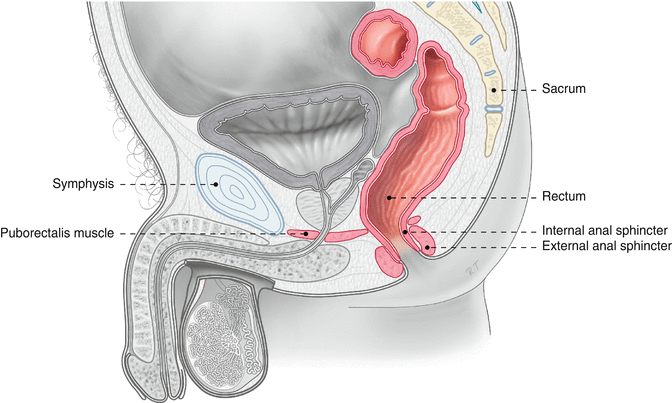
Associated anomalies
Manifestations and diagnosis
- Low type(70%): levator anal sling ??? ?? ??? ??
- 3 lesions: ??? ??, ????, ????? ??
- ??: ?? ?? cut-back anoplasty
- ??: 2-3?? ? cut-back anoplasty or jump-back anoplasty
- High type: levator anal sling ??? ?? ??? ??.
- ??? ??? ?? ??.
- 1??: Colostomy (??????, ?????)
- 2??: 3~6?? ?, Posterior sagittal anorectoplasty (PSARP, Pena op.) ?.
- 3??: 2? ? ?? ?? ??, Hegar #14? ?? ????? ?? ??, ? ?? ????? ??? ?? ????.

E.g, imperforate anus
Leave a Reply