Nonspecific infections of the upper respiratory tract
Infections of the sinus
Infections of the ear and mastoid
Infections of the pharynx and oral cavity
Acute pharyngitis
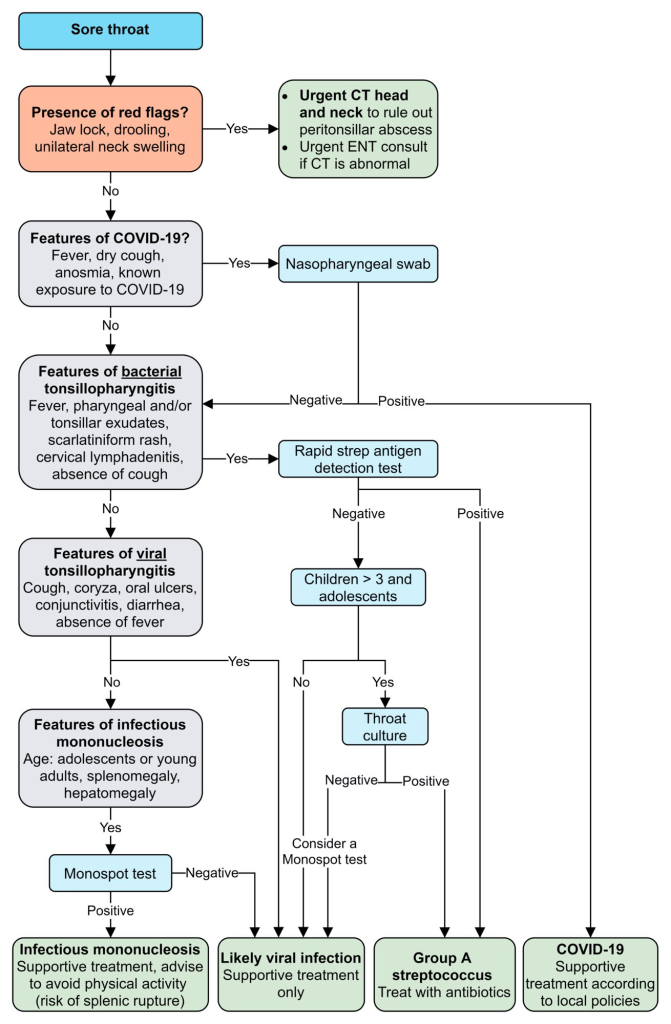
Diagnostic Approach
- Red Flags -> CT scan
- COVID-19 feature -> nasopharyngeal swab
- Bacterial tonsillopharyngitis -> Rapid strep test
- Viral tonsillopharyngitis -> supportive care
- Infectious mononucleosis -> Monospot test
GAS pharyngitis +/- tonsillitis
- H153 Streptococcal Infections
- DOES NOT USUALLY CAUSE A COUGH
Rapid test for group A streptococcus
- 70-90% sensitivity
- Positive rapid test or throat culture: Initiate antibiotic therapy for acute GAS pharyngitis.
- Negative rapid test: Wait for throat culture results; treat if culture positive.
Acute viral tonsillopharyngitis
Self limited
Oral infections
Vincent angina
Ludwig angina
- Cellulitis of the submandibular space.�
- Etiology
- Dental infections in the mandibular molars that spread contiguously down the root into the submylohyoid� (and then sublingual) space
- Usually polymicrobial
- Symptoms
- Systemic: fever, chills, malaise
- Local compressive: mouth pain, drooling, dysphagia, muffled voice, airway compromise. Floor of the mouth is often elevated, displacing the tongue.
- Diagnosis
- CT scan of the neck
- Treatment
- Early IV antibiotics prevents airway compromise.
Septic thrombophlebitis of the internal jugular vein (Lemierre disease)
- Rare, but life-threatening infection that affects young immunocompetent patients.
- Pathophysiology
- Usually caused by the gram-negative anaerobic bacillus Fusobacterium necrophorum (part of the normal oral flora)
- The bacterium invades the lateral pharyngeal space through the lymphatic system and affects the neurovascular structures, causing IJV thrombosis and infection.
- Once the IJV is infected, septic thromboemboli can seed other organss, particularly the lungs, causing respiratory symptoms and leading to nodules on chest x-ray.
- Clinical presentation
- Prolonged (eg, weeklong) duration of sore throat with high fever, rigors, dysphagia, and neck pain and swelling along the SCM muscle.
- Respiratory difficulties.
- Diagnosis
- Culture from blood or pus
- Management
- IV antibiotics
- Surgery (eg, incision and drainage, vein excision) in patients with no response to antibiotics.
Infections of the Larynx and Epiglottis
Laryngitis
Croup
Epiglottitis
- Epidemiology
- S.pneumonia, H.influenzae
- Risk reduced with H.influenzae vaccination
- Clinical manifestations
- Rapidly progressive & life-threatening
- Fever, sore throat, drooling, muffled voice
- Airway obstruction (stridor, dyspnea)
- Pooled oropharynx secretions
- Laryngotracheal(anterior neck) tenderness
- Diagnosis
- Direct visualization
- Imaging (lateral neck x-ray)
- Treatment
- Early artificial airway (if needed)
- IV antibiotics (ceftriaxone + vancomycin)
FIGURE 31-3
Acute epiglottitis. In this lateral sox-tissue radiograph of the neck, the arrow indicates the enlarged edematous epiglottis (the �thumbprint sign�).