Introduction
Primary tumors
Clinical presentation
- By mitral valve obstruction
- Malaise, syncope, symptoms of HF
- Exacerbated by upright posture, and alleviated by lying down.
- By embolism
- Facial and arm hemiparesis
- Constitutional symptoms
- Fever, weight loss
- Symptoms resembling connective tissue disease, b/c tumor releases IL-6
- Neurologic symptoms
- Pseudo-mitral valve disease
- Diastolic murmur
- Atrial enlargement
ECHO: MV ant. Leaflet ?? echo dense mass. EF slope ?
Myxoma
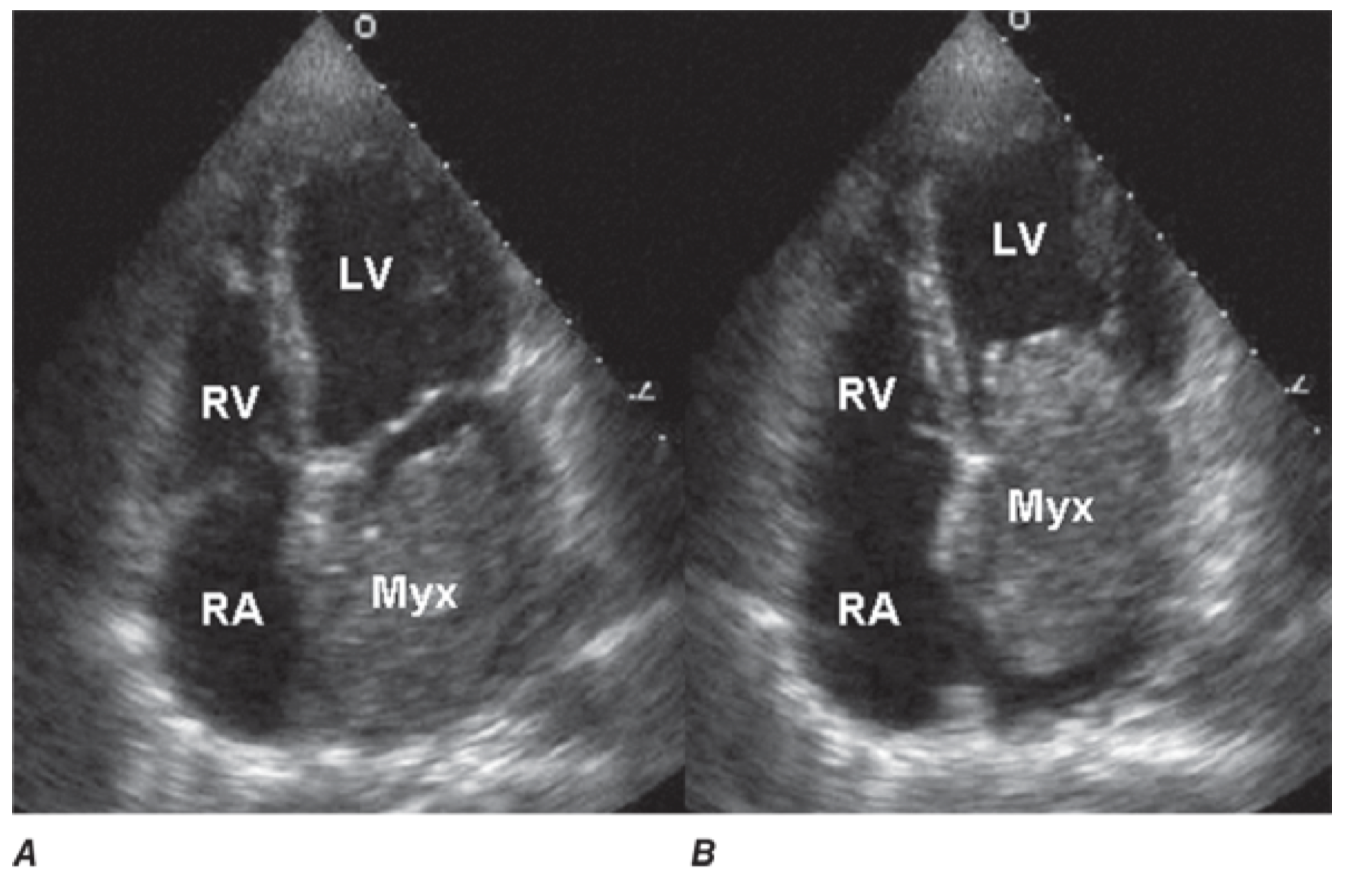
FIGURE 266-1
Transthoracic echocardiogram demonstrating a large atrial myxoma. The myxoma (Myx) fills the entire left atrium in systole (A) and prolapses across the mitral valve and into the left ventricle (LV) during diastole (B).
FIGURE 266-2
Cardiac magnetic resonance imaging demonstrating a rounded mass (M) within the left atrium (LA). Pathologic evaluation at the time of surgery revealed it to be an atrial myxoma.
m/c primary cardiac tumor.
Usually forms a pedunculated mass in the left atrium(~80%) that causes syncope due to obstruction of the mitral valve.
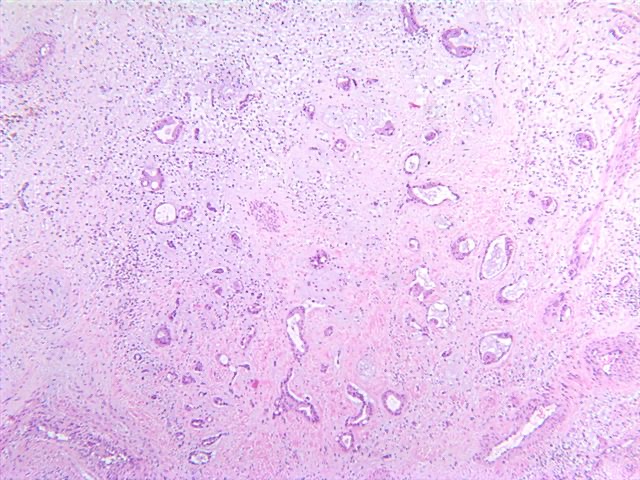
Histology
- Benign mesenchymal tumor with a gelatinous appearance and abundant ground substance
- Scattered cells within a mucopolysaccharide stroma
- Angiogenesis, hemorrhaging, and friability d/t large amount of VEGF from myxoma.
Treatment
Myxoma
Other benign tumors
Rhabdomyoma
Benign hamartoma of cardiac muscle
Most common primary cardiac tumor in children; associated with tuberous sclerosis
Usually arises in the ventricle
Sarcoma
m/c malignancy
??? ?? ?????! SCD? ?? ?? ???? ??
Tumors metastatic to the heart
M/c cardiac tumor
From breast and lung carcinoma, melanoma, and lymphoma.
Most commonly involve the pericardium, resulting in a pericardial effusion
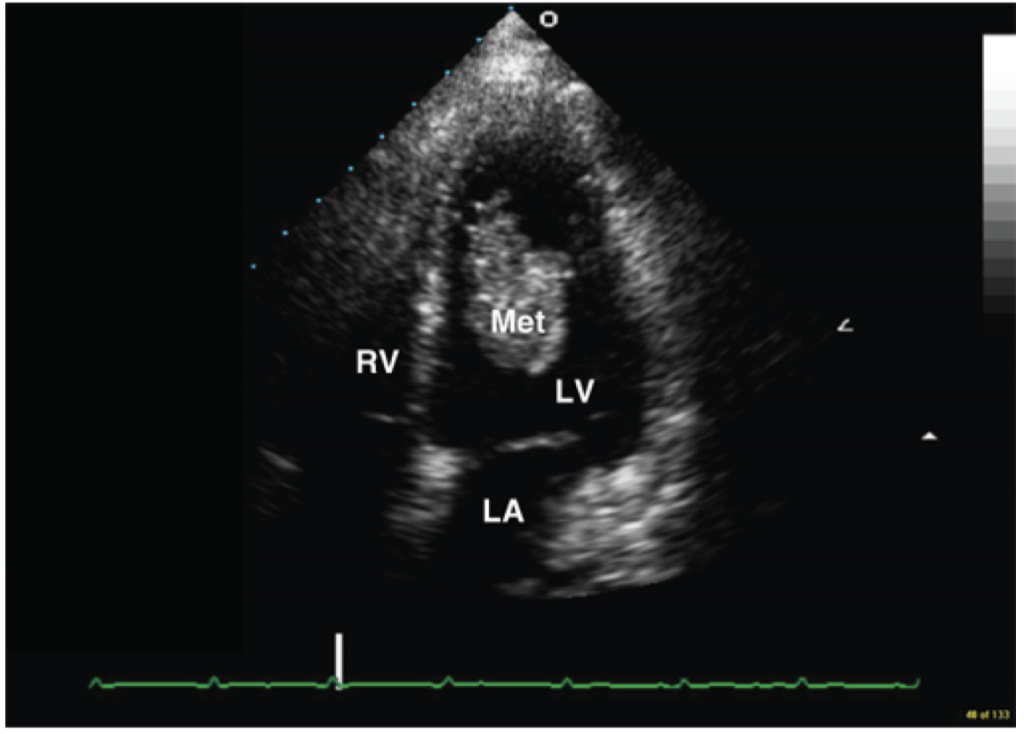
Large metastatic lesion (Met) in the left ventricle (LV) of a patient with diffusely metastatic bladder cancer. The mass arose from the interventricular septum and prolapsed into the aortic outflow tract during systole.
Leave a Reply